

Buy more, save more
Applied automatically in the cart. Most people keep one in the kitchen, one in the car and one in the bag.
More information
Kitchen diversion safes
The kitchen is the best room in the house for hiding something, and almost nobody uses it. A bedroom has four or five obvious places to look and someone searching it knows all of them. A kitchen has sixty containers on open shelves, in cupboards and in the fridge, and every one of them looks exactly like the next. Adding one more tin, jar or can changes nothing about how the room reads.
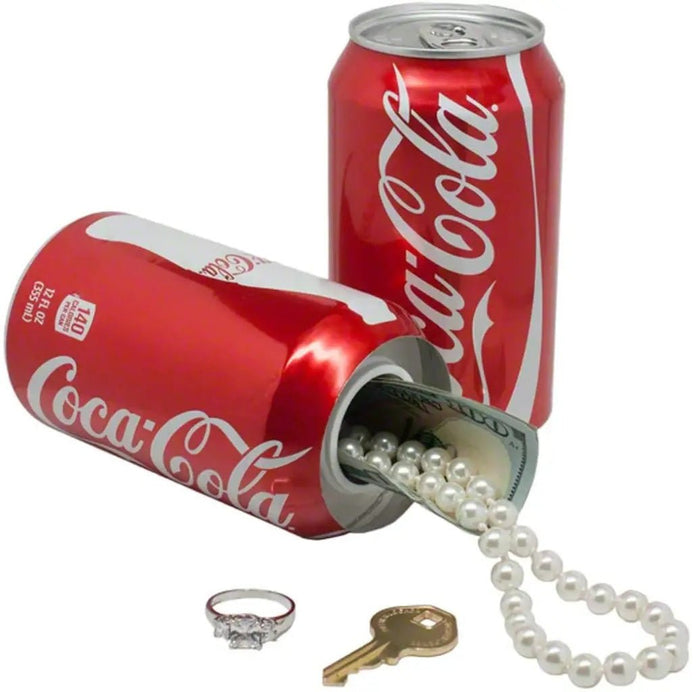
Kitchen diversion safes take that to its logical end: a food tin, a jar of olives, a cleaning product or a drink can with a compartment inside, the right weight in the hand and a label that survives being read. They sit among the groceries and they are opened the way the original is opened.
What fits inside
Cans and small tins take rolled banknotes, keys, a USB stick, a ring or a pair of earrings. Larger jars and food containers take a passport, a phone, a small jewellery box or several items at once. Every product page lists the outside size and the usable compartment separately, because a large container does not always mean a large compartment. Measure what you want to store before you choose.
Where to put it
The rule is that the object has to belong where you leave it. A drink can goes in the fridge or on the shelf where the drinks are, not in a cupboard on its own. A tin of tomatoes goes among the tins. A cleaning spray goes under the sink with the other bottles. A single item standing apart from its family is the one thing that gets picked up.
Two practical points. Keep the hiding place out of daily use so it is not opened by accident by someone else in the house, and avoid the container everybody reaches for every morning. And if the kitchen is shared, choose the product that matches what the household actually buys.
Why the kitchen works
Opportunistic theft is fast. Someone with a few minutes goes to the bedroom, the desk and the living room, and leaves. Emptying a kitchen cupboard tin by tin takes longer than the whole visit. That is the entire mechanism: not a stronger lock, just a container that nobody has a reason to open.
It also works against the everyday problem that has nothing to do with burglary. Housemates, visitors, cleaners, curious children and relatives who mean no harm all open drawers. None of them open the flour tin.
The rest of the house
If the kitchen is not the right room for what you need to keep, the bathroom collection covers personal care and cleaning containers, the car collection covers accessories for the glovebox and the boot, and the toolbox collection covers tools and fixings for the garage. The full catalogue has everything in one place.
Made by hand, shipped from Spain
Most of these objects are assembled by hand to order, which is why preparation takes about a week before the parcel leaves. Orders travel in plain, unbranded packaging with a tracking number, to more than fifty countries. Times by destination are in the shipping policy, and the FAQ answers the rest.
These are decorative containers with a concealed compartment, not certified safes: they offer no protection against fire, water or forced entry, and they are intended for the lawful storage of your own belongings. Food containers are supplied empty and clean and are not meant to hold food.